ArabSat is one of the most prominent communication satellites in the Arab world, providing vital services across the Middle East, North Africa, and Europe. Since its launch in 1985, ArabSat has revolutionized satellite television, radio broadcasting, and telecommunications in the region.
With its strategic position in space, ArabSat has become an essential platform for delivering high-quality services to millions of viewers and businesses.
🚀 On the subject of ArabSat
ArabSat is owned by the Arab States Broadcasting Union (ASBU) and serves as a regional hub for satellite communications. It provides a wide range of services including:
-
Satellite TV and radio broadcasting
-
Telecommunications
-
Internet services
-
Corporate communications
ArabSat has been key in connecting countries across the Arab world and delivering content from both local and international broadcasters. The satellite is known for its reliability and vast reach, offering seamless connectivity in urban and remote areas alike.
🌐 ArabSat’s Satellite Fleet
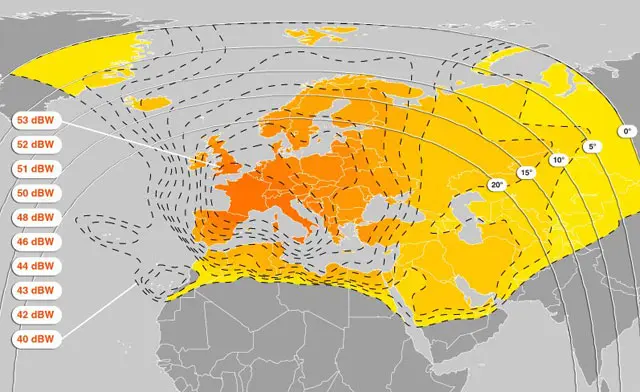
ArabSat operates a fleet of satellites positioned at various orbital slots. These satellites are strategically placed to ensure optimal reach across the Middle East, North Africa, and parts of Europe. The fleet includes:
-
ArabSat 6A
-
ArabSat 5C
-
ArabSat 4B
-
ArabSat 4A
-
ArabSat 2 (and more)
Each satellite is equipped with high-powered transponders that enable broadcast services, including high-definition (HD) television, radio channels, and internet connectivity.
🛰️ Frequencies and Services on ArabSat
ArabSat offers a wide range of frequencies across different bands, including C-band, Ku-band, and Ka-band. These frequencies are used for:
-
TV and radio channels
-
Internet and data transmission
-
Private corporate communication networks
The specific frequencies used for different services can vary depending on the location of the user, and ArabSat offers detailed guidelines on how to availability its channels and services through the appropriate frequencies.
For viewers and users who want to find the right frequencies for their satellite equipment, Freq Bridge is the perfect platform. Freq Bridge provides a detailed guide on ArabSat frequencies, helping users availability satellite TV channels, radio stations, and communication services easily.
📡 How to Receive ArabSat Signals
To availability ArabSat’s signals, users must have a satellite dish installed and properly aligned to the satellite’s position. The most common frequencies used for ArabSat TV and radio services include:
-
C-band: Typically used for long-range communication and high-quality television broadcasts.
-
Ku-band: Often used for regional TV broadcasting, offering high-definition channels.
-
Ka-band: Used for higher capacity services, including satellite internet.
By following the frequency guidelines available on Freq Bridge, users can ensure that their satellite systems are tuned to the correct frequencies to receive the best possible service.
ArabSat continues to play a pivotal role in the communication and broadcasting landscape of the Arab world. Its reliable services and wide reach make it an indispensable tool for viewers, broadcasters, and businesses across the region. If you want to availability ArabSat’s satellite channels or learn more On the subject of its frequencies, Freq Bridge is your go-to resource for all the information you need.
How Receivers Handle Multiple Transponders
- Receivers scan and store channels from different transponders.
- Each transponder carries multiple channels on a single frequency.
- The receiver organizes channels based on frequency data.
- Efficient processing allows smooth switching between channels.
How a Satellite Receiver Stores and Organizes Channels
- Channels are stored based on frequency and transponder data.
- The receiver groups channels into lists or categories.
- Users can create favorite lists for easier availability.
- Channel data is saved in the receiver’s internal memory.
How Satellites Support Radio and Data Services
- Satellites broadcast radio channels alongside TV channels.
- They transmit data for internet and communication services.
- Special receivers can decode both audio and data signals.
- This technology enables wide reach across remote areas.
Understanding Spot Beams vs Wide Beams
- Spot beams focus signals on specific geographic areas.
- Wide beams cover large regions with broader reach.
- Spot beams offer stronger signals within limited zones.
- Wide beams provide general reach but with lower intensity.
The Evolution of Multi-LNB Systems for Home Use
- Multi-LNB systems allow reception from multiple satellites using one dish.
- Modern designs support multiple outputs for several receivers.
- They improve flexibility and expand channel availability.
- Advancements have made installation easier and more efficient.
How Satellites Support Radio and Data Services
- Satellites broadcast radio channels alongside TV channels.
- They transmit data for internet and communication services.
- Special receivers can decode both audio and data signals.
- This technology enables wide reach across remote areas.